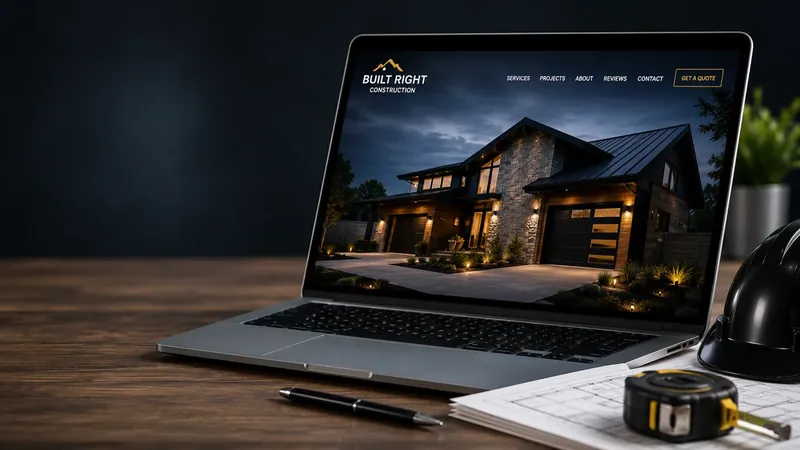
Every customer searching for a contractor is making a trust decision before they’re making a hiring decision. They don’t know your work yet — all they have to go on is what shows up when they look you up. That’s the entire job a website does, and it’s the whole answer to why you need a professional website: it answers “can I trust this guy” before you’ve said a word.
What a Craigslist ad or no site at all actually signals
Think about what a Craigslist post or a handwritten sign gets you: Craigslist-tier customers, Craigslist-tier budgets, Craigslist-tier trust. If a cheap classified ad is the only thing selling your business, you’re going to attract the guys shopping for the lowest bid — because that’s exactly what a Craigslist ad signals. A real website does the opposite. It signals you’re an established, legitimate business, and that brings in customers willing to pay what the work is actually worth instead of nickel-and-diming you before you’ve even shown up.
It’s 2026 — every legit business has a website by now. Not having one isn’t neutral anymore, it’s a red flag. A customer scrolling past you because you don’t show up online isn’t thinking “he’s just old school,” they’re thinking “can I actually trust this guy.” Fair or not, that’s the assumption you’re up against the second someone can’t find you.
Not having a website isn’t just a missed opportunity anymore — it’s actively holding you back. Every day without one is another day the guy down the road with a decent site gets the call that should’ve been yours.
What “professional” actually means here
It doesn’t mean flashy. It doesn’t mean expensive. It means the basics are handled: your name, your services, and your phone number are easy to find; the photos are real jobs you’ve done, not stock images; the site loads fast and works on a phone, since that’s how almost everyone will find you; and it doesn’t look like it was thrown together in an afternoon with a free template that says “Your Company Name Here” somewhere you forgot to change.
A DIY site built on a free builder isn’t nothing — it’s better than no site. But it usually shows: slow load times, generic templates every other business on the same platform is also using, and stock photography that a customer can spot from a mile away. It closes the gap partway. A built-for-you site closes it all the way.
There’s a findability side to this too. Google’s own local ranking guidance says local results come down to relevance, distance and prominence — and a real site with real content on it feeds two of those three. That’s another reason why you need a professional website rather than a placeholder page: the placeholder doesn’t give Google anything to work with.
The credibility gap shows up in the bid, not just the click
This is the part most guys don’t connect: the site doesn’t just get you the call, it changes what happens once you’re standing in front of the customer quoting the job. A legit-looking site is the difference between a customer questioning your price and a customer assuming you’re worth it. You’re not just competing for the click anymore — you’re competing for whether they trust the number you give them.
Why you need a professional website, in one line
Same skills, same trucks, same work — the guy with the better website gets picked first, and gets less pushback on price once he’s picked.
Make your next first impression a better one.
New websites $697. Redesigns $597. Nothing due up front. Standard hosting is $37 per month separately.
Let’s talk about your website